
Opening Bell
Joint Effort
Rooted in the Northwest craft tradition, Mory Homes offers thoughtful furniture and storage solutions with an architectural point of view.
 By Rachel Gallaher March 17, 2026

This article originally appeared in the January/February 2026 issue of Seattle magazine.
After more than a decade as the executive director of local lighting company Graypants, one of the cofounders, Jonathan Junker, decided to return to his architectural roots. In 2019, he was raising a family on Bainbridge Island when he opened his namesake studio. At first, Junker enjoyed the holistic approach to residential design; a few years in, however, he noticed a lack of balance in his practice. “I was focused 100% on architecture,” he says, “but I felt like something was missing; that hands-on side of it.”
About a year ago, Junker decided to “switch it up again” and started meeting with members of the local design community to talk about possible collaborations. “I was at my laptop all day, and I had this burning desire to be creative in a different way,” he says. One company he reached out to was Plum Projects, a design-build studio founded by Tyler Cufley and Drew Daly in 2010. “I really admired their holistic and hands-on approach to design in general, along with their roots in the arts and sculpture,” Junker says. Known for its contemporary designs and a woodshop full of craftspeople, Plum has always counted collaboration among its strengths. So, when Junker reached out, Cufley and Daly were eager to chat.
Earlier that year (2024), the two (along with a third founder, Amy Appleby) had soft-launched Mory Homes as a subset of Plum Projects, prototyping a modular shelving unit to fill a gap they saw in the market between the high-end custom cabinetry they installed in many of their projects and the flimsy, flat-packed particle board offerings available online and at big-box retailers.
When Junker reached out, Plum had a client seeking a custom piece to round out their interiors. The firm had previously designed their home, and they were still searching for the perfect dining room table.
“We met Jon, and we were super into his work,” says Cufley, “and so we said, ‘Hey, let’s work on this together.’ We gave him a lot of leeway to be creative because we really believe in that process. It just seemed like a natural fit.”
“If you live in a loft downtown right now, but you might move into a house someday, we want you to be able to take our pieces with you.”—Tyler Cufley, cofounder, Mory Homes
The final piece—a hardwood dining table with curved corners, notched legs, and handcrafted joinery details—was a hit with the client. “It was immediately clear that we all wanted to keep the momentum going beyond a single project,” Junker says.
For the designers behind Mory, flexibility is key. They wanted to create adaptable systems that could stay with a client for years, if not decades, thanks to the brand’s attention to material and craftsmanship.
“If you live in a loft downtown right now, but you might move into a house someday, we want you to be able to take our pieces with you,” Cufley explains, noting that all of Mory’s shelving is made with solid hardwood in options including white oak, walnut, and ash. He and the team believe that storage solutions shouldn’t be an afterthought, but something worthy of full display, like a beautifully carved table.
When Junker joined the brand—he is the creative director, but still practices architecture as well—the team started running with a series of ideas, spinning out four product lines in a little over a year: the Camber shelving unit, the Shore modular shelving system, Mesa tables, and forthcoming this year, the Kasmo lighting range. The collections are modern and streamlined, with influences that draw from mid-century predecessors, European and Japanese design, and textures, colors, and shapes found in the natural world.
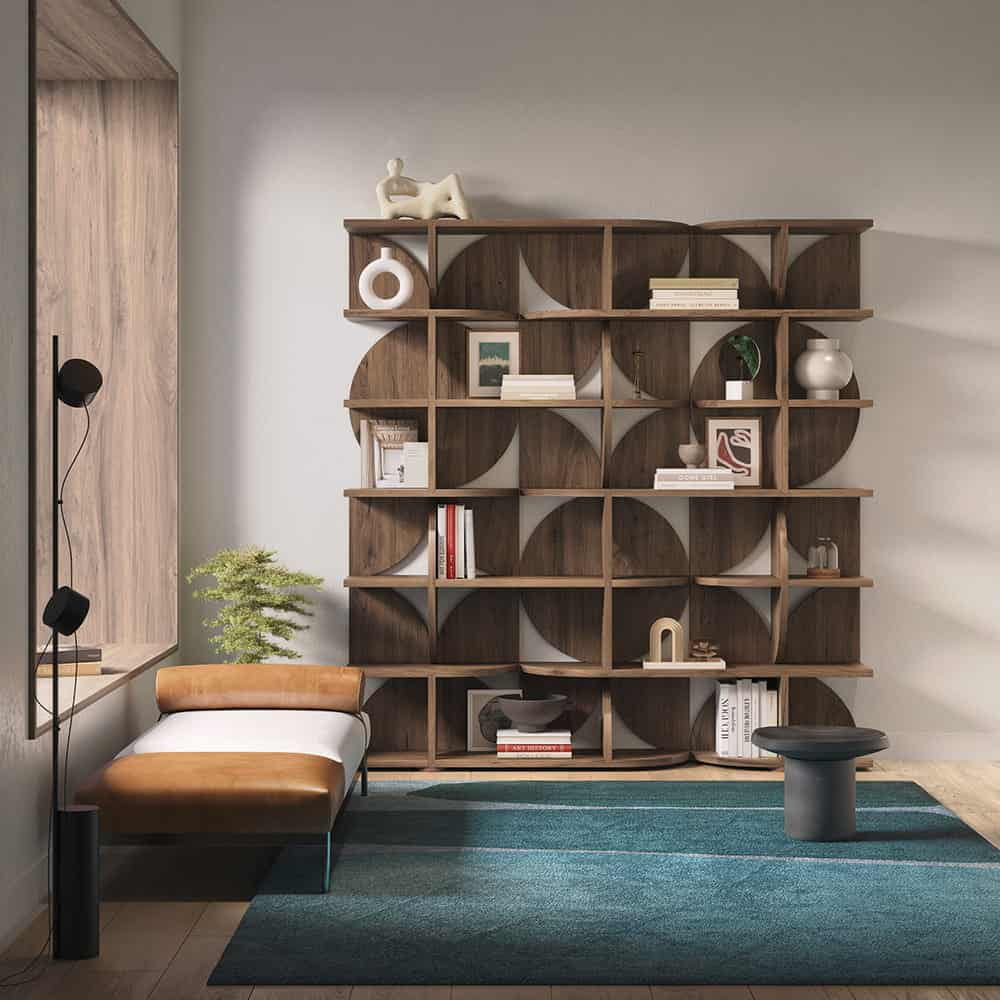
Last fall, Mory traveled to the High Point Furniture Market in North Carolina, marking a debut on the national stage. The team is excited to get the word out, but they also want to focus on local clientele and the potential for growth in the Pacific Northwest, where consumers tend to place a premium on handcrafted goods.
“Some of the same DNA travels through all of it,” Cufley says of the brand’s portfolio. “The idea crosses back into a warmth of materiality that you want to have in your space.”